
'The concern that the bad bank may create a moral hazard for the system is extremely valid.'

Infosys was the only large-cap IT player to report sequential constant currency (cc) revenue growth for the June quarter (1 per cent ), which was ahead of analyst expectations, but the company's sharp downward revision in its growth guidance took most brokerages by surprise. In line with the cut in its FY24 revenue guidance (cc) to 1-3.5 per cent, brokerages have unanimously reduced FY24 EPS estimates for the company in the range of 2-4 per cent, though the Street is likely fearing even further downside, they say. Global brokerages Macquarie and Nomura downgraded Infosys to underperform and reduce ratings, respectively, with the latter cutting the target price to Rs 1210 from Rs 1260.

Bandhan Bank has filed a draft red herring prospectus with Sebi for an IPO of up to 119 million equity shares, with face value of Rs 10 each.
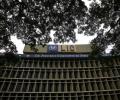
Sixteen merchant banks are in the fray to act as book running lead managers (BRLM) for the initial public offering of Life Insurance Corporation of India (LIC). These merchant banks will have to make a presentation before the Department of Investment and Public Asset Management (DIPAM) on August 24-25. The shortlisted banks are BNP Paribas, Citigroup Global Markets India, BofA Securities, Goldman Sachs (India) Securities, HSBC Securities and Capital Markets(India), J.P. Morgan India, Nomura Financial Advisory and Securities (India), Axis Capital, DAM Capital Advisors, HDFC Bank, ICICI Securities, IIFL Securities, JM Financial, Kotak Mahindra Capital, SBI Capital Market, and Yes Securities India.

A total of 49 companies raised Rs 81,615 crore in Samvat 2077, more than the preceding four years and almost double the amount raised in the previous year. Samvat 2078 appears even more promising with mega issues of Paytm and Life Insurance Corporation (LIC) of India. However, Paytm's record could be short-lived as state-owned LIC is planning to launch a Rs 1-trillion IPO by March 2022.

The stock of State Bank of India (SBI) may re-rate soon, believe analysts, if the lender manages to safeguard its net interest margin (NIM) going ahead. This, along with controlled credit costs, should aid the outlook of the stock which has been underperforming the markets for some time now. "We believe delivery of growth on guided lines, sustenance of NIMs near current levels, and controlled asset quality parameters aiding controlled credit costs should lead to strong profitability and drive re-rating of the stock," said analysts at JM Financial.

Do you have financial planning queries? Ask rediffGURU Kirtan A Shah.

The only feasible way to have a healthy banking sector could be making it mostly private, along with two or three large, better-run government banks, suggests T N Ninan.

Low home loan rates by banks could put large players in an advantageous position over smaller non-bank players, believe analysts.

Actively managed debt funds with the flexibility to go long on duration made a strong comeback on the returns chart in 2023, thanks to softening bond yields. The average one-year returns of floater, long-duration, gilt, and dynamic bond funds, which ranged between 2.3 per cent and 4.5 per cent at the end of 2022, now stand at over 7.2 per cent, with some schemes delivering over 8.5 per cent, according to data from Value Research. Debt fund returns are inversely related to yields of underlying investments, meaning a decline in yields is positive for funds.

Bajaj Finance was the top laggard in the Sensex pack, tanking up to 8 per cent, followed by M&M, Tata Steel, Bajaj Auto, ONGC, HDFC Bank and Kotak Bank. On the other hand, TCS, Tech Mahindra, HUL, Axis Bank and ITC were the top gainers.

Axis Bank, Tata Steel, Kotak Mahindra Bank, ICICI Bank, Tata Motors, and Bajaj Finance were among the other major laggards. Tata Consultancy Services, Reliance Industries, UltraTech Cement, Infosys, HCL Technologies, and Tech Mahindra were among the gainers.

Kotak Bank was the biggest loser in the Sensex pack, falling 3.71 per cent, followed by RIL, HDFC Bank, Bajaj Finance, PowerGrid, IndusInd Bank, Asian Paints, HDFC and ITC.

In India, it is not easy to fight it out with the large banks which are nimble-footed and technology-savvy and are continuously innovating on the retail turf with newer products for customer acquisition.

'No commercial bank will be allowed to fail. There is nothing to worry about.'

Ajit Mishra, vice president, Research, Religare Broking, answers your queries.

Among the 30 Sensex companies, Larsen & Toubro, Power Grid, NTPC, State Bank of India, Reliance Industries and HDFC Bank were the biggest laggards. Sun Pharma and Nestle were the only gainers.

Since the RBI is the 'lender of the last resort', as per terms of arrangement, Yes Bank would have to exhaust immediate liquid assets before accessing this fund.

Hospitality firm OYO is planning to raise up to $1.2 billion (around Rs 8,000 crore) through an initial public offering and is expected to file the draft red herring prospectus with Sebi next week, sources told PTI on Thursday. OYO has appointed investment banks like JPMorgan, Citi and Kotak Mahindra Capital to manage its public issue, they added. Comments from OYO could not be obtained at the time of filing the story. The proposed initial public offer (IPO) plan of the hospitality firm follows the spectacular success of Zomato's IPO that ended with a bumper oversubscription on July 16, and was biggest since March 2020.

'We emphasise the importance of not basing investment decisions solely on electoral outcomes.' 'Instead, focusing on investing in high-quality businesses capable of prospering regardless of the political landscape is paramount.'

Omkeshwar Singh, Head, Rank MF, a mutual fund investment platform, answers your queries.

Ajit Mishra, vice president, Research, Religare Broking, answers your queries.

Global trends, trading activity of foreign investors and movement of oil benchmark Brent crude would dictate terms in the domestic markets this week, analysts said. Equity markets, which fell nearly 3 per cent last week, may face volatile trends amid the monthly derivatives expiry on Thursday. "This week marks the September month Futures and Options (F&O) expiry, which is expected to bring about volatility in the market," said Santosh Meena, Head of Research, Swastika Investmart Ltd.

Top laggards in the Sensex pack included HDFC, ICICI Bank, TCS, HCL Tech, Kotak Bank, Asian Paints, TechM and HUL, dropping up to 2.67 per cent.

Initial public offerings (IPOs) by start-ups are bringing cheer to investors and investment bankers alike. After food delivery company Zomato, Nykaa has issued the fattest pay cheque to the managers of its share sale -- Rs 148 crore, or 2.8 per cent of its issue proceeds of Rs 5,300 crore. In absolute terms, this is the second-highest amount paid to investment bankers for handling an IPO, while in percentage terms, it is the highest for large IPOs (>$300 million) in the last one year, shows an analysis of the data provided by Prime Database, a primary market tracker.

'Focus on 19,400/64,900 as the key resistance levels for the Nifty/Sensex.'

Shares of public sector enterprises have corrected by up to 22 per cent month-to-date until March 19, 2024. Analysts attribute this steep fall to the valuation exuberance seen after a sharp run in these counters last year and suggest investors remain selective regarding the stocks in this space. "The rally in public sector undertaking (PSU) stocks has been stretched and sharp, although it is somewhat justified by improvements seen in earnings, operations, balance sheets, and overall profitability.

Waves of foreign portfolio investments worth over Rs 51,000 crore splashed into the Indian market in 2021 as overseas investors turned net buyers of domestic securities for the third straight year while excess global liquidity and other factors steered the ebb and flow of their investing ways. With the global financial system still flush with liquidity, emerging market assets, especially equities, might well remain the preferred investment avenue for many more months to come, experts opined. As the equities sizzled during most of 2021, that also saw economy slowly coming back into the recovery path, Foreign Portfolio Investors (FPIs) turned net buyers but their investment is much less compared to net inflows of Rs 1.03 lakh crore in 2020.
Stocks of public sector undertakings (PSUs) have been on fire in the past year as investors cheered an improvement in key operating metrics and embraced counters of these state-owned enterprises, analysts suggest. The S&P BSE PSU Index has gained over 90 per cent in the past year, rising much higher than the S&P BSE Sensex, which has rose nearly 19 per cent during this period, according to ACE Equity data. The BSE PSU Index, reports show, has delivered a compound annual growth rate (CAGR) of 28 per cent (including dividends reinvestments) over five years and risen by almost 60 per cent in the past year.

The offering comprises secondary sale of 13.68 million shares, constituting 27.3 per cent stake.

An advisory body of EPFO has rejected a proposal to engage private banks -- ICICI, Axis and HDFC Bank -- for collection of PF contribution from employers.

After the finance minister directed public sector banks to join the account aggregator (AA) ecosystem, 5-6 major ones, including State Bank of India (SBI) and Bank of Baroda are expected to go live by July-end. Sahmati, an industry alliance for the AA ecosystem, has been working with PSU banks to get them onboarded for quite some time now. So far, Union Bank of India and Punjab National Bank (PNB) have gone live on the AA ecosystem. While Union Bank has been live for a while, PNB went live earlier this month.

Among the Sensex shares, Infosys rose the most by 1.37 per cent, followed by Larsen & Toubro (0.90 per cent), and Wipro (0.83 per cent). HDFC Bank, ICICI Bank, Reliance Industries, ITC, TCS, Kotak Bank, Asian Paints and Titan were among the lead gainers.

Investors shunned shares of Bajaj Finance on Friday, a day after the non-banking financial company (NBFC) reported a sharp contraction in its net interest margin (NIM) for the March quarter of the financial year 2023-24 (Q4FY24). The losses accounted for a fifth of the benchmark S&P BSE Sensex's 609-point loss. Most brokerages have tamed their earnings expectations for the next couple of quarters, after the management said it expected the pressure on NIMs to continue in the near term.
Top losers in the Sensex pack included SBI, HDFC twins, Bajaj Auto, ONGC and Tata Steel, falling up to 2.49 per cent.

The other board members will be Sunil Mehta, former non-executive chairman of Punjab National Bank, as the non executive chairman of Yes Bank, Mahesh Krishnamurthy and Atul Bheda as non-executive directors.

American Tower bulks up in India with $1.2 billion Viom stake buy

Shares of Bajaj Finance sprinted 4.7 per cent to Rs 7,732 per share on the BSE in Thursday's (January 4) intra-day trade as the non-bank finance company's (NBFC's) December quarter business update reflected minimal impact of the Reserve Bank of India's ban on two of its lending products. The shares, eventually, ended 4.4 per cent higher at Rs 7,710 per share as against 0.69 per cent gain in the benchmark S&P BSE Sensex. The NBFC's asset under management (AUM) topped the Rs 3-trillion-mark at the end of December 2023, swelling by roughly Rs 20,700 crore (35 per cent year-on-year) to hit Rs 3.11 trillion-mark.

The contribution from asset management companies (AMCs) has surpassed the Rs 3,000 crore target for the creation of a Rs 33,000 crore backstop facility for debt mutual funds (MFs). The initial corpus for the Corporate Debt Market Development Fund (CDMDF) is nearly Rs 3,100 crore, according to multiple government officials and AMC executives. "The fund is operational now. "The required corpus has been raised by AMCs and the remaining part (Rs 30,000 crore) is in the form of a guarantee from the government which will be activated only in case of a credit event," explained D P Singh, joint CEO and deputy MD, SBI MF.
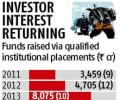
The return of investor confidence in the equity markets is bringing some of the large companies back to the fund-raising table.
